“Hi Pastor Obermeyer. Would you like to unwrap these statements of yours a bit, which you gave in answer to my questions? Here, Preacher; the floor, or rather, the pulpit is yours! If you wish to take it—go!”
“Okay, rolling up my sleeves, lol.”
Rachael: What most breaks your heart? What do you see as the biggest threat to the church today?
Pastor Kevin Obermeyer: The condition of the church these days, which gets so caught up with the world and then wonders why it isn’t being effective. Secular worldviews, worldly attitudes, Biblical illiteracy, and ignorance.
What I mean is that I see many worldly philosophies and practices actively being taught in the church by ignorant and immature Christians. Spiritual immaturity is rampant, as is Biblical illiteracy. I hear more people offering their logic and opinions than actual Scripture verses. I hear Christians talk about “centering,” themselves, not realizing they are really talking about centering their “chi,” or life energy, which is a complete Eastern thought about how our life energy vibrates out of balance and needs to be re-centered.
Even yoga is designed for this, each position centering and balancing a different part of the chi; and yet we find “Christian yoga,” which is kind of a contradiction in terms, being led in some churches. I hear Christians talk about karma—good and bad karma and how karma is going to, “get that person.” This is horrible. Karma is not the same thing as the Biblical teaching of reaping what you sow despite its popular use even among Christians. Karma is a cosmic force, energy, or presence generated by the sum of a person’s actions, good and bad, which affects the nature of a person’s existence and determines their destiny or fate through transmigration into their next incarnation. That’s a mouthful, but it’s even more than that. It’s also one of the three margas, or paths to Brahman or salvation taught in Hinduism, being the path through works.
All of this comes from paganism and mythology and is completely contrary to Scripture, which teaches against reincarnation and salvation by works. It also puts our trust for justice and vengeance in something besides a merciful God and bypasses mercy altogether. Sadly, so many people today think they get into Heaven by doing enough good things to outweigh the bad, which is why many people struggle with the security of their own salvation in Christ.
As it is written: “Thereisnone righteous, no, notone; Romans 3:10 (NKJV)
For by grace you have been saved through faith, and that notof yourselves; it is the giftofGod, not of works, lest anyone should boast.Ephesians 2:8-9 (NKJV)
Karma completely undermines the finished work of Christ on the cross and the hope we have in Him. It puts all the responsibility on us and our own abilities to save ourselves, which is an impossible task. And it isn’t enough just to say you don’t use the word, karma, that way but mean something else, like good or bad luck, (also pagan). The Bible is clear that it is what it is regardless of how you use it (c.f 1 Corinthians 10:19-21). And if that isn’t clear enough, Paul specifically writes that we are to avoid even the appearance of evil (1 Thessalonians 5:22). The Bible is replete with passages, (Old and New Testament), telling God’s people not to be like the pagans and not to do what they do, especially in dance, worship, and lifestyle. We are to be different, set apart, holy. That’s something I think a lot of Christians overlook but really should investigate. Both Paul and Christ warn even further against causing others to stumble in their faith by one’s own misleading actions.
People offer their thoughts and positive energy along with their prayers; again Eastern thought. And they confuse Eastern and New Age meditation, (emptying your mind and thoughts), with Biblical meditation, (filling your mind and thoughts with Scripture and Godly reflection). Christ warns that an empty “house” is vulnerable to being filled with demons, (Matthew 12:44-45). We think if we call it, “mindfulness,” then it’s not the same thing as Hinduism, Buddhism, and New Age thought; whatever you want to call it, it isn’t Biblical.
I see churches and pastors getting distracted and becoming more concerned about looks and feels and making sure people are entertained rather than about teaching solid truth and deep faith. We sure get fired up about political and social issues, and we’ve got to look fly in front of people to keep up with the world, while the meat of God’s Word for daily living, spiritual growth, furthering of God’s Kingdom, and changing that world can just take a backseat—as if we don’t truly believe in it’s Power. I hear more motivational speaking than preaching, and those are not the same thing. Sadly, the church is sick and is presenting a shallow Gospel, and then we wonder why so many people, especially young people, question and abandon their faith. They’ve been given a different Gospel (2 Corinthians 11:3-4; Galatians 1:6-9) with no saving power. Their need isn’t satisfied. Their faith doesn’t take root because their faith hasn’t been placed in the true Solid Rock of Christ, but sinking sand.
Rachael: If you could tell the Church anything, what would it be? What’s on your heart?
This comes at the expense of a broken heart. —Pastor Pablo Catala
Physical and emotional stress; personal time and freedom; often any sense of security because things change so much in your life; and struggles with self-worth as you are constantly being evaluated, of which you mostly only hear about your shortcomings. —Pastor Kevin Obermeyer
As a missionary it has cost convenience, comfort, seeing family… but the promised reward of souls far outweigh the costs. —Anonymous Pastor, Kathmandu, Nepal
What is the hardest part of pastoring?
Seeing what people need to do and watching them not do it, no matter how I present it or how I word it, no matter how much time I spent with them and then having to hear the lament of,“Pastor, you were right,” which does not comfort me as I’m seeing the carnage of their bad decisions. —Anonymous Pastor Expecting to be loved, understood, maybe even appreciated? They have no idea how needy we are. —Anonymous Pastor’s Wife
Sometimes your own children reject everything you’ve lived for and still you must keep going. —Anonymous
Realizing how much you don’t know, and feeling like you never do enough, aren’t good enough, or that you might misspeak something heretical. —Pastor Kevin Obermeyer
What is your biggest challenge and most unexpected hardship in pastoring?
I guess my passion for the church gets me in trouble. —Janet Foley
I recently had the privilege of being on an outreach team to help Pastor Pablo and Nicole Catala’s pioneer church in Bridgeport CT. I was struck by how laid down, how wide open and vulnerable their hearts and lives were for God and the people of their city. I watched them love people with the love of God. I watched the ease with which they outreached, their children alongside them—truly a team, like a machine in sync. I took note of their home. Everywhere I turned there were photographs of their family and decor that shouted in unison about God and family. I learned their story later and asked them to share it. Here it is.
The Catala Story
Nicole Catala: One night my husband and I were fighting and basically done with our marriage. We both never had an example. We were only 6 months married and wanted to go for a divorce! That night my husband packed his clothes and left the house. The very next day I got a flyer from someone that there was going to be a healing crusade right across the street in Poe Park, put on by Victory Chapel in the Bronx, NY. As I was looking at the state of my life I knew I needed a miracle. I didn’t want my life to be just like the life of my family: Divorced, having multiple children from different men. I decided to go to the first night of the healing crusade. I was in a state of depression at only 18 years old and felt there was no hope for me and my eight month old son. Continue reading “From Dope Dealer to Hope Dealer”
Compared to Christ, there’s no match. —Nicole Catala
This is a tough question. I feel that on one hand, it’s such a relief to see this question posed, and I want to dive right in. On the other hand, I’m somewhat afraid to indulge the part of me that wants to lay it all out. I suppose one of the costliest things has been that of personal friendship. A pastor’s wife must maintain a certain brevity and reserve. You must be soft and vulnerable and allow women to find comfort and friendship in you, but it would never be fair for them to bear your loneliness or frustrations, and so there is forever a feeling of distance that can be hard on a woman’s heart. Perhaps these friendships can be forged in the timeline of long term attendance and maturity, but I would imagine that takes years to develop. —AnonymousContinue reading “Life as a Pastor’s Wife”
Did you think when you became a Christian you would be pastoring one day? Tell me about when you realized you were called to be a pastor /pastor’s wife?
Sophie Foley: I always believed I would marry a pastor. But then again, I’ve wanted to marry John since I was 12, and knew he was called to it.
Pastor John Foley: It was something that came to my mind but I wasn’t clear about. I had some other plans. I watched a world evangelism video of Greg and Lisa Mitchell in South Africa and I couldn’t imagine doing anything else. I responded to a call to preach. I still wasn’t sure but a man in the church told me if I wanted to I probably was. I felt
Pastor John and Sophie Foley and children, Malden, MA (Boston area)
moved that God could use my life to make an impact by preaching to people around the world. I thought most people felt like I did. I dedicated my life to becoming a pastor but it didn’t happen for another 8 years or so.
Sophie: We arrived in Malden, Massachusetts on June 2, 2017. We promptly began Bible studies in our home and soon moved to a hall nearby and began having Sunday morning services. My husband, Pastor John, met a group of young men almost immediately, who had been praying for a young pastor for a year. That same week we met a woman and her adult children, who had been praying for a young church as well. Within a few weeks, we had 20+ people attending. It was mind blowing. Truly, God had a people here, He just needed someone to come.
We remodeled and moved into our current building in May of this year and have had such favor with the community. This really has been a dream come true, to serve God here. It is right in the heart of the new downtown development and one block from the T station. We run anywhere from 20-60 people at any given time. —The Potter’s House, Malden MAhttps://www.pottershouseboston.com/
Pastor Kevin and Janet Foley, McMinnville Oregon
Janet Foley, (Pastor Kevin Foley’s wife & John Foley’s mother): My parents were faithful Methodists, very active in the church, my father teaching the adult class and my mother 3rd and 4th graders, me in the youth choir, etc.. But we never heard the term “born again,” and never heard that we must repent of our sin and truly invite Jesus Christ in to our hearts, which caused a lot of problems in our home!
My parent’s marriage was rocky. I got in huge fights with my dad where he accused me of things I never ever thought of doing. Just because I had incense in my room I was accused time and time again of drugs and lying. Finally I said to myself, if he thinks I’m so bad then…I’ll be bad!!! Where’s some dope? I became a rebellious pot smoking hippie chick at 13 years old. My 21 year old boyfriend turned me on to LSD—I didn’t want to do it, but I didn’t want to hurt his feelings. I was intrigued with the music, yoga and philosophy my brothers brought home from college and the partying, flower children, and concerts of the time. Continue reading “The Call: Why Did You Become a Pastor? (Part 2 in a Series of Interviews with Pastors & Pastors Wives, 2018)”
Pastor Winslow, I interviewed you and your wife, Suzanne, as part of my series of interviews with Pastors and Pastor’s Wives for Pastor Appreciation Month two years ago.You were missionaries to Mexico for 27 years and pioneered and planted churches there. Can you please bring us up to date on the church in Mexico what you’re doing currently?
I dreaded the thought of setting up and conducting chemistry and biology lab experiments in my house for my homeschooled children. Science fascinates me, but it is not my forte. So I was thrilled to discover College Prep Science, founded by former college professor and homeschool dad, Greg Landry.
It was my honor to interview Greg, and I’m excited to introduce you to him and his academy in this article.
College Prep Science offers several live online science classes, as well as two day science lab intensives for 7th – 12th grade homeschooled students year round, and a variety of week long summer camps for 6th-12th graders.
Greg, what or who influenced you to pursue a degree in science?
PFC David Fosdick Taylor was only 19 when he and his fellow soldiers of the 104th Infantry Division “Timberwolves” of the United States Army fought to the north of where the Battle of the Bulge was waged. The cold, wet conditions in November and December 1944, made it all the more miserable and caused David and many of the men to suffer from trench foot.
Shots rang out as the Timberwolves pressed toward the Nazi army and enemy snipers fired at them from the trees. In the exchange of gunfire, a bullet found its target and an American soldier fell and lay wounded in the space between them and the enemy.
A volley of enemy ammunition rained down as David ran across the open field and carried his fellow soldier back toward their unit. A bullet ripped through David’s leg and he stumbled, but regained his footing and kept going.
David lay recovering from his wound in the 203rd General Hospital outside of Paris, grateful to be alive and to have saved the soldier’s life. But he longed for home. His thoughts drifted to his younger sister, Jean, and the sweet sound of her singing as she played Christmas carols on the family piano in the parlor. He picked up his pen and began to draw.
David received the Purple Heart awarded to servicemembers wounded or killed while engaged in battle with the enemy.
~~~*~~~
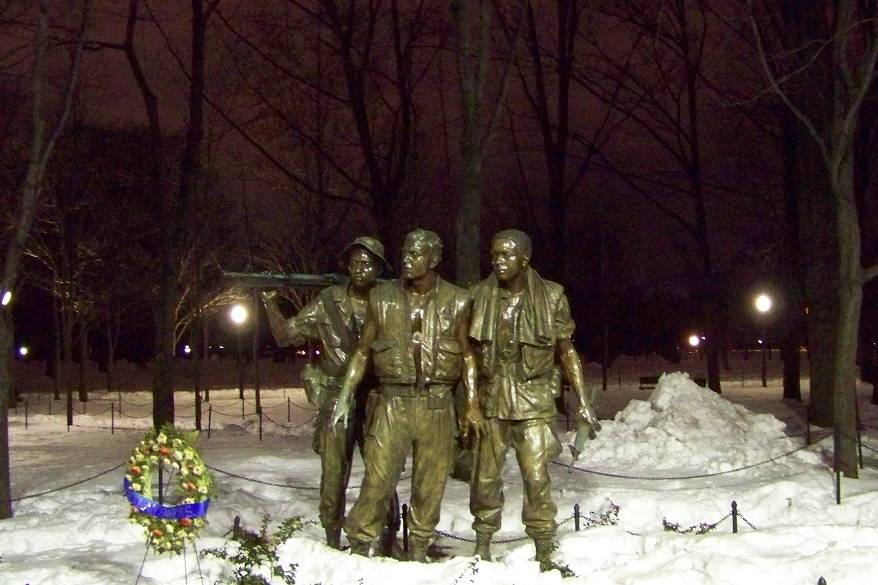
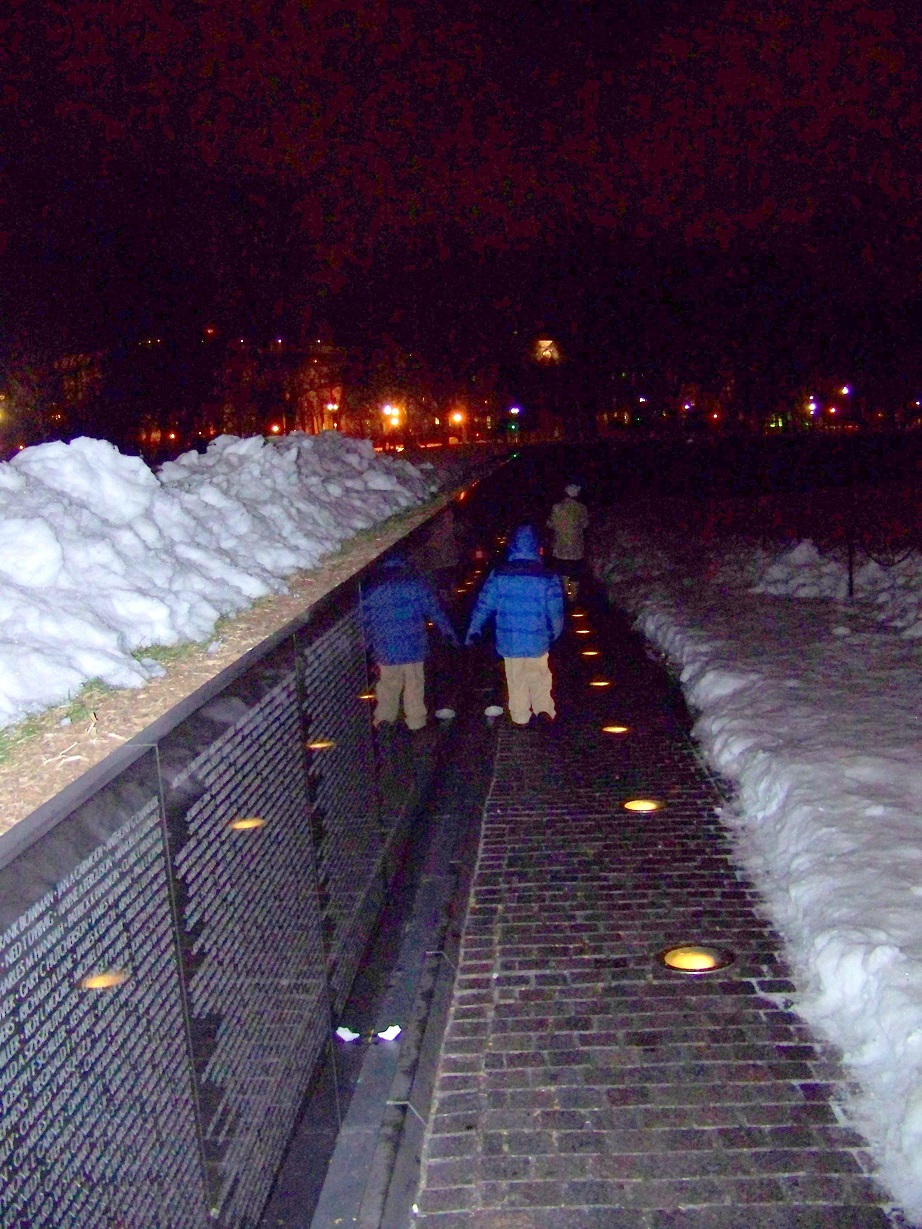
I wonder how many know that in 1999, congress designated May as Military Appreciation Month? Someone informed me that May fourth was Star Wars Day. But of the fifty people I asked, only two knew the third Saturday of May is designated as Armed Forces Day. It bothers me when heroes, those who serve, are overlooked, unheard, misunderstood, or not shown the appreciation and support they deserve.
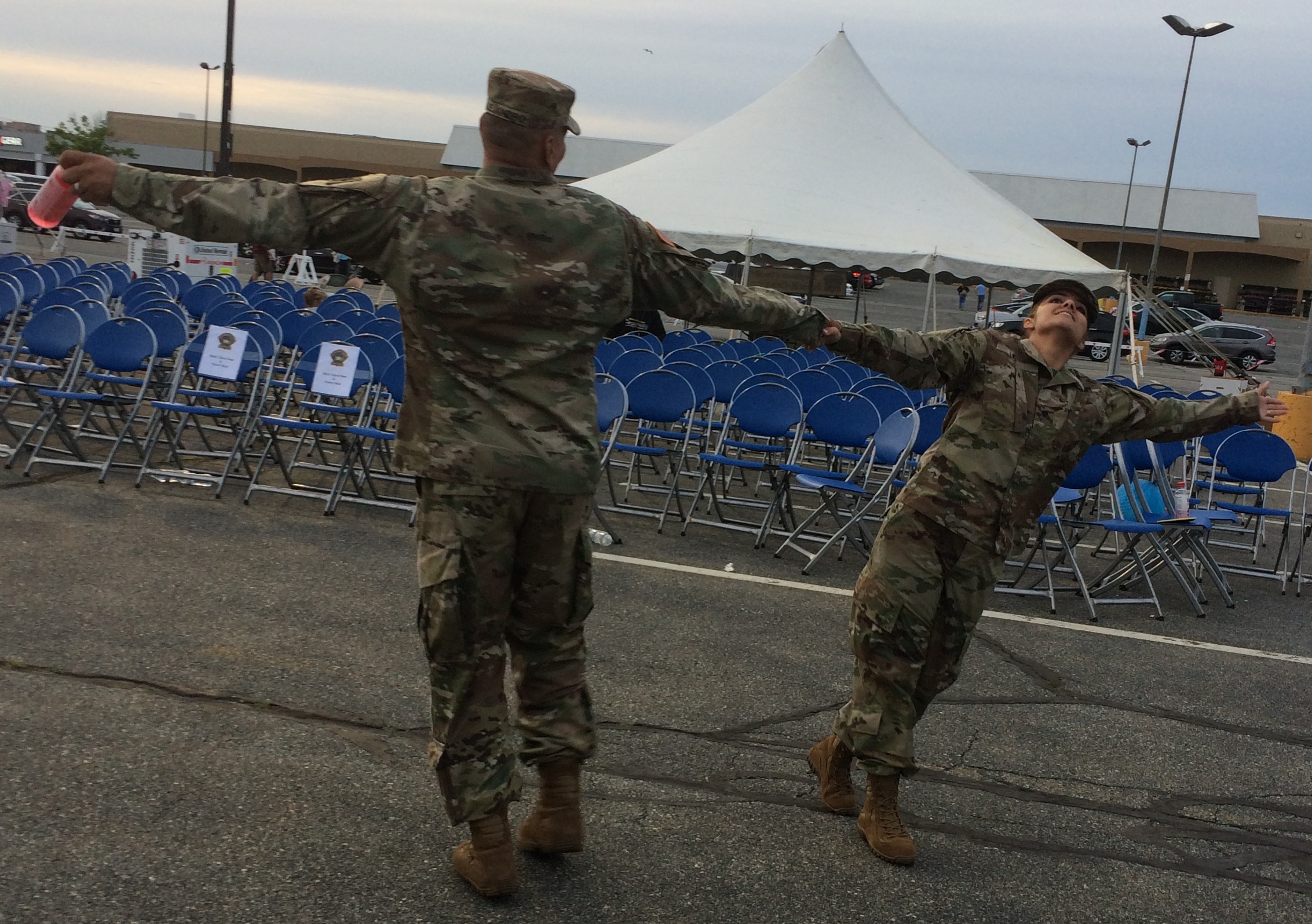
On a wind-whipped, drizzly late afternoon, I set out with notebook and pen to the annual Memorial Day weekend Troops in the Spotlight event across town. I’d hesitated to go, and wondered if they’d talk to me. Our troops protect and serve us in all kinds of adverse conditions, and the weather didn’t dampen their spirits. What a joyful privilege to interview our active duty and retired military members and share their words along with military history.
“I joined the military because I’m answering my calling,” said the first young United States Army serviceman I interviewed.
“The sacrifice of being away from my family is the hardest. The births, funerals, birthdays I miss. When my niece asked why I wasn’t at her birthday…when you come home, and kids don’t know you. It’s hard not being there for my family, but those people I’m not there for are the reason why I’m gone. I’m doing this for them, to take care of them. So, by being away, I am there for them,” he said.
Armed Forces Day
The National Security Act, signed into law on July 26, 1947[1], by President Harry S. Truman, unified the Army, Navy, Marines, and Airforce under the Department of Defense.
To signify this unification, “President Harry S. Truman led the effort to establish a single holiday for citizens to come together and thank our military members for their patriotic service in support of our country.
On August 31, 1949, Secretary of Defense Louis Johnson announced the creation of an Armed Forces Day to replace the observance of separate service days.[2]”—Department of Defense website[3]
The Army, Air Force and Navy adopted Armed Forces Day and last celebrated their individual service days in 1949. The Marine Core League supports Armed Forces Day and continues to celebrate Marine Core Day as well (November 10th). Likewise, the Coast Guard (under the authority of Homeland Security in peacetime, and the Navy in wartime) celebrates both Coast Guard Day (August 4th) and Armed Forces Day.
President Truman made the Presidential Proclamation of Armed Forces Day on Feb 27, 1950.[4] First celebrated on May 20, 1950, it is now observed on the third Saturday of May.
“I thought, why not be the first to serve in my family?”
“It’s stable. Good pay.” (Served in Kuwait twice)
“I was in a rut and in need of a way out. I felt the military was a good way out —[it offered] schooling, job.
“After college, I couldn’t find a job. My Father was an Army reservist and encouraged me. My Grandfather was a World War II Navy veteran.”—U.S. Air Force
“I joined because I wanted to do something better with myself.”—Retired, U.S. Air Force serviceman of 20 years
What bothers you?
“The hardest thing is being away from my family. I have friends serving overseas.”
“When I ask for the military discount, and they ask for my husband’s ID. I’m the service person.”
“Recognize women in the military. People ask about us being harassed in the military. I get harassed by those not in the military.”
“Staying up all night.”
“The PC. Why is there any such thing as politically correct?”
“I have lost two friends in combat.”
“Most American citizens aren’t aware servicemen died today in combat. Do they know their names?”
~~*~~
The History of Memorial Day
In 1866, a year after the Civil War ended, a women’s memorial association in Columbus, Mississippi, decorated the graves of Confederate and Union soldiers with flowers. This benevolent gesture inspired the poem “The Blue and the Gray,” by Francis Miles Finch. Perhaps these women’s reconciliatory actions influenced the creation of Memorial Day and its customs.
On May 15th, 1868, Union hero and Commander-in-Chief of the Grand Army of the Republic, Maj. Gen. John A. Logan, issued General Order Number 11, designating May 30 a day of memorial, originally known as Decoration Day, “for the purpose of strewing with flowers or otherwise decorating the graves of comrades who died in defense of their country during the late rebellion, and whose bodies now lie in almost every city, village, and hamlet churchyard in the land.”
With President Ulysses Grant presiding, General James A. Garfield (who became 20th President of the United States in 1881) spoke at the first national Memorial Day observance ceremony. This took place on May 30, 1868, at Arlington National Cemetery, the grounds of which were formerly the estate of Confederate General Robert E. Lee.
Memorial Day was later expanded to honor all deceased American military men and women who gave their lives defending our nation in battle. In 1971, federal law moved the observance of Memorial Day to the last Monday in May.
Today Memorial Day is observed at Arlington National Cemetery by decorating each grave with an American flag and placing a wreath on the Tomb of the Unknown Soldier. In other military cemeteries, flags are placed on the graves of all veterans and even on their spouse’s graves on Memorial Day.
General James A. Garfield’s Speech, known as “His finest hour,” given at the first national Memorial Day:
“I am oppressed with a sense of the impropriety of uttering words on this occasion. If silence is ever golden, it must be here beside the graves of fifteen thousand men, whose lives were more significant than speech, and whose death was a poem, the music of which can never be sung. With words we make promises, plight faith, praise virtue…”[5]Click to continue.
Canadian officer and surgeon Major John McCrae penned the famous wartime poem, In Flanders Fields in 1915 during WWI. It inspired the red poppy’s rise of popularity and subsequent adoption as a symbol of remembrance. By 1917, In Flanders Fields was known throughout the English-speaking world and used to bring attention to the war effort, recruit American soldiers, and help raise money for the troops. [6]
In Flanders Fields
-by John McCrae
In Flanders fields the poppies blow
Between the crosses, row on row,
That mark our place; and in the sky
The larks, still bravely singing, fly
Scarce heard amid the guns below.
We are the dead. Short days ago
We lived, felt dawn, saw sunset glow,
Loved, and were loved, and now we lie
In Flanders fields.
Take up our quarrel with the foe:
To you from failing hands we throw
The torch; be yours to hold it high.
If ye break faith with us who die
We shall not sleep, though poppies grow
In Flanders fields.
Do you have concerns about our military?
“No concerns. Everything is a cycle. What goes up will come down and what is down will come up.”
“Drill instructors aren’t tough enough today on recruits.”
“I’m concerned the military has gotten a little soft.”
“The definition of hazing has gone too far.”
“Now there is more paperwork. The military used to be more physical. You can’t engage the enemy with paper.”—U.S. Army
“We need to toughen up the military.”
“We hope they don’t shut down more bases. This is how we support our families. This is our job. This is who we are. This is what we do.”
“It is what it is. I don’t get caught up in the possibilities, the threats. I knew what I was getting into when I signed up.”—U.S. Air Force
“It’s horrible how people treat our police officers.”
“The way kids are being brought up. They don’t respect authority, and only want to play games. I think they should all serve two years in the military after high school.”
“Children today have no respect for authority.”
“People don’t have respect for authority, for each other, the military, our country.”
“We need more enlistments.”
“I’m concerned about the disconnect. Less than 1% of the population carry the burden of serving in our military.”—U.S. Army
“The situation in the nation between citizens, the youth, and police officers.”
“Taking away gun rights doesn’t stop the bad guys. We need rules and regulations. But you need the right to defend yourself.”
“Be aware. Isis is everywhere. They are here. Living on your street.”
“They, [American civilians], think Otis Air Force Base is closed. They don’t know there is still a war [on terror.]”—U.S. Air Force
~~*~~
War is a terrible thing, but sometimes it’s necessary to wage war to win peace and secure freedom. There is no neutral ground—we either advance good or enable evil.
Many are the sacrifices our military members make for their country and those they love.
Greater love has no one than this, that one lay down his life for his friends. (John 15:13 NASB)
I’d be remiss to not draw attention to the most epic battle ever waged—the war for our souls. Jesus fought to rescue us from the grip of our enemy Satan’s tyranny. We don’t have to live captive to our sin, sorrow, or past.
The greatest danger—that of the unredeemed soul precariously perched on the edge of hell is ever present, whether they’re aware of their jeopardy. A wise soldier wouldn’t step into battle unprepared. An even greater tragedy is to navigate life’s battles and step into eternity unprepared.
Jesus said, “He who has the Son has life; he who does not have the Son of God does not have life.” I John 5:12 (NKJV)
Why choose to remain a prisoner when love drove Jesus to give His life on the cross as ransom for our sin? He defeated the devil, conquered death, and hell when he rose, thus opened the way so we can walk free.
Therefore if the Son makes you free, you shall be free indeed. John 8:36 (NKJV)
~~*~~
How can American civilians support our military?
“Many Americans don’t understand our military. A gap exists between civilians and the military. People ask, most don’t know we [U.S. military forces], are still at war [in Iraq as part of the global war on terror.] In World War II, there was a shared sacrifice with civilians. They participated in the war effort to meet the needs. We need civilians to educate themselves and participate.”—U.S. Army
“Remember, we are serving. Serving here is just as important as serving overseas. We have jobs, we volunteer in the community, train personnel to deploy, help with school, with storm support, the Red Cross, the Boston marathon, communications.”—U.S. Air Force
“I never really thought about it; I get treated well. Show support—like at Troops in the Spotlight.”—U.S. Army
“We do our duty. Be supportive of the military. Some towns locally don’t show support for us. When they see us, it’s like, ‘What are you doing here?’ — I’d like to see more parades and events—to be more a part of the culture.”—U.S. Army
“I could say more benefits, or that some things need to be fixed with the VA, but what we really need is unity. Have your differences. You’re an immigrant. Welcome—but you are an American now. Be one nation.”—U.S. Army
“Be an American. Show your support, like you’re doing now. Appreciate the benefits of the U.S. being your home. Take care of it. America needs to come first. Just be a civilian and do the best you can.”—U.S. Air Force
“I’m concerned that we are divided. Realize what we as a nation are about: United—one nation.—Represent your flag. We need understanding, to accept, and respect each other. Out of many one people. Have your culture; have your heritage. Be proud of your heritage—but we are all Americans. E Pluribus Unum; out of many, one. We are Americans first.”—U.S. Army serviceman twice deployed to Afghanistan.
“Those citizens who are doing their best—we appreciate it.”—U.S. Army
~~~*~~~
The good soldier fights for freedom, righteousness, and securing an ordinary peaceful life and opportunity for their people. Those fulfilling wholesome occupations are part of a soldier’s reward they can look forward to coming home to. May we each do our duty in light of the trust we’ve received as citizens of our great nation. And if you are a Christian, also as soldiers and ambassadors for the gospel of Jesus Christ. No task is insignificant if it plays a part in fulfilling our call. What are you called to? Do that.
Link to video of: The Star Spangled Banner (with lyrics) Performed by Sandi Patti with the original lyrics written by Francis Scott Key in 1814 and added verse composed by Claire Cloninger for the Statue of Liberty Centennial Celebration in 1986.
To our American military personnel who served, to those who paid the ultimate price by laying down their lives for our freedom, and those who currently serve and protect in our United States Army, Navy, Air Force, Marines, Coast Guard, Space Force, and National Guard: Thank you.
May God help us raise our families, appreciate our freedoms, care for our countrymen and nation, and live our lives in such a manner worthy of the sacrifices of our men and women in uniform. I pray for God’s direction, protection, provision, strength, and blessings on them and their families. May our hearts hold our American military in grateful honor and prayer and demonstrate our love and support for them, not only on designated days, but always.
“In addition to the named wars and conflicts listed below, members of the American military (and some civilians) have played small but active roles in many other international conflicts.”
Dates
War in Which American Colonists orUnited States Citizens Officially Participated
Major Combatants
July 4, 1675 -August 12, 1676
King Philip’s War
New England Colonies vs. Wampanoag, Narragansett, and Nipmuck Indians
1689-1697
King William’s War
The English Colonies vs. France
1702-1713
Queen Anne’s War (War of Spanish Succession)
The English Colonies vs. France
1744-1748
King George’s War (War of Austrian Succession)
The French Colonies vs. Great Britain
1756-1763
French and Indian War(Seven Years War)
The French Colonies vs. Great Britain
1759-1761
Cherokee War
English Colonists vs. Cherokee Indians
1775-1783
American Revolution
English Colonists vs. Great Britain
1798-1800
Franco-American Naval War
United States vs. France
1801-1805; 1815
Barbary Wars
United States vs. Morocco, Algiers, Tunis, and Tripoli
1812-1815
War of 1812
United States vs. Great Britain
1813-1814
Creek War
United States vs. Creek Indians
1836
War of Texas Independence
Texas vs. Mexico
1846-1848
Mexican-American War
United States vs. Mexico
1861-1865
U.S. Civil War
Union vs. Confederacy
1898
Spanish-American War
United States vs. Spain
1914-1918
World War I
Triple Alliance: Germany, Italy, and Austria-Hungary vs. Triple Entente: Britain, France, and Russia. The United States joined on the side of the Triple Entente in 1917.
1939-1945
World War II
Axis Powers: Germany, Italy, Japan vs. Major Allied Powers: United States, Great Britain, France, and Russia
1950-1953
Korean War
United States (as part of the United Nations) and South Korea vs. North Korea and Communist China
1960-1975
Vietnam War
United States and South Vietnam vs. North Vietnam
1961
Bay of Pigs Invasion
United States vs. Cuba
1983
Grenada
United States Intervention
1989
US Invasion of Panama
United States vs. Panama
1990-1991
Persian Gulf War
United States and Coalition Forces vs. Iraq
1995-1996
Intervention in Bosnia and Herzegovina
United States as part of NATO acted peacekeepers in former Yugoslavia
2001
Invasion of Afghanistan
United States and Coalition Forces vs. the Taliban regime in Afghanistan to fight terrorism.
2003
Invasion of Iraq
United States and Coalition Forces vs. Iraq
~~~~~~~~~~~*~~~~~~~~~~~~~
Originally posted as Tribute on Memorial Day 2017 | Updated 2/2024 | Rachael M Colby, Tattoo It On Your Heart
I received the following messages from a friend who is a teacher. She wishes to remain anonymous.
TEACHER: Texting you this… Need people to help remind me why I teach when I’m having bad days.
Teaching is one of the hardest jobs. You rarely ever get kudos. You mostly hear what you are doing wrong.
So, in those rare moments when the smoke clears, and you see what truly matters, and you see the little things you do, and the impact they can have, that is the gold you have to hold on to—or you will quit.
*Per request, I have re-posted this article from 2017 in honor of #TeacherAppreciationDay and #TeacherAppreciationWeek Please take the time to encourage teachers, not just this week, but throughout the year.
So Far Today:
I comforted and prayed with a teacher who just had a miscarriage.
I’m standing in the hallway welcoming students, hustling the stragglers to class. Glancing in my classroom, I realize one of my boys is crying. I motion him to come into the hall and he tells me his aunt died from a stroke last night. We talk, I give him a hug and help him grieve. He gives me permission to share with the class. His friends quickly change seats and circle him. No talking or touching; they are middle school boys after all. They support him by just being there. They take out paper and write notes of encouragement—without any prompting. #proud #whyiteach
All before 9:30am.
11:20am Update
Another student running up and down the hallway screaming and crying. Counselor trying to help. He refuses… I step into the hallway, take his hands, have him take deep breaths with me to calm him down so he can talk to the counselor without screaming. #whyiteach
Teaching is never about the subject you are teaching. It’s about showing compassion, how to grieve, process anger, express joy. So much emptiness and anger in my students— they just don’t know how to handle life. Happy that I can be here to help them.
Remind me of this when I’m having a really bad day.
Anyone who becomes a teacher because they want kids to learn a subject is missing a huge piece of teaching. I went into teaching because I want to teach children how to successfully live their lives, process emotion, and become productive people. The subject I teach has so little to do with what I really do.
“When will I use this?” they say. (Algebra, science, etc..)
The answer is: “Who really cares? Will you remember that I taught you compassion when your classmate’s aunt died, that I held your hands when you just couldn’t take another step, that I told you I care about you?”
And yes, of course, I’ll give you another chance when you screw up yet again in my class, because this is #whyiteach.
Update 1:00 pm
Two boys try to fight in my classroom. Calmed them down and talked to them. One of the boys tells me he’s not really mad at the other kid. He just watched his dad get arrested and he’s really upset… Sigh. #whyIteach
At lunch, the boy whose aunt died comes up to me. “I’m doing better,” he says quietly, and dashes away.
Last Block:
The boy who was crying and screaming in the hallway comes to class. He’s smiling now, and we’re just figuring it all out. It’s a good day. #whyiteach
I know I could get a job in a better district. My family asks me why I stay all the time.
“Who’s going to teach them if I don’t?” I reply.
“Someone will,” they say.
“But will they care about them? Will they pray over their desks? Will they cry over them? Will they love them?”
I can’t walk away from these kids. Many of them don’t have adults that truly care. They are used to being thrown away, adults not sticking with them. I can’t be one of those people. Teaching is a calling, not a job. I have to teach them how to be cared for and to care for one another, to create community in the classroom. Once I’ve done this, and only then, can I actually teach them any academic content with success. This usually takes a few months to establish.
I have to teach them, I don’t know if someone else will care for them like I do. #whyiteach
A Few Weeks Later:
TEACHER: Why do I teach again? My head hurts, my neck aches…
RACHAEL: Because it matters—maybe for eternity for some of your students. Even though you don’t see it now.
Because they need you even when they don’t want you.
Because you may be the only love, the only Jesus, some will see today and over the next few months.
Because you have to. It’s your calling. #makeadifference #youmatter
Because it costs more to quit than to carry on. #whyyouteach
Yet in all these things we are more than conquerors through Him who loved us. Romans 8:37 NKJV
And He said to me, “My grace is sufficient for you, for My strength
is made perfect in weakness.” Therefore most gladly I will rather boast in my
infirmities, that the power of Christ may rest upon me. 2nd Corinthians 12:9 NKJV
It has come to my attention that those who read my post entitled, Herald, and also, What #BillyGraham Meant to Me, and perhaps prior posts, in their emails rather than on my website, may not have realized that several of what appeared to be still photos are actually videos. If you click out from the email to read my posts on my website, there are arrows on the photos which indicate that they are videos. Apparently that doesn’t show in emails. I am so sorry I didn’t catch this sooner.
Also, the black box that says, Tattoo It On Your Heart, mid way through Herald is a podcast, (audio with music and sound effects and me reading my poem, He is Risen).
In my Billy Graham post, there was no text with the link in the videos listed under Resources, so some may have mistook those for still photos as well. I did include a text link for the videos included in my actual Billy Graham story, as I usually do in all my posts, but I did not under Resources. Hopefully those who read my post in their emails noticed the links to those videos and all the others in prior posts.
To avoid these issues in the future and so you don’t miss out on any announcements, promotions, updates to posts, or content in the sidebar and other pages on my website, I will be changing the settings for posts received via email. In the future when you receive my posts by email, they will only include an excerpt of the post with a request that you. “Click here to continue reading this post.” This will take you out to my site which will give you access to the most updated version of my post and site and to resources on the other pages. I plan to add a Q&A and a Resources feature to my site soon.
Until I make these changes, please click the title of my posts in your email as that will also take you out of the email to my site to read posts.
*If you read my prior post, What #BillyGraham Meant to me, you may have noticed my whopper of a typo. If so, sorry about that. I’ve corrected it. Must be that staying up writing until 3 o’clock in the morning makes for a fuzzy brain. If you didn’t catch my error—whew! 😉
PART 3 of 3: Family First or Church First? An interview with dragon slayer, disciple maker, Pastor Brian Williams and his wife Ruth from Agape Missions International, Nepal.
Question 20: How do you have the energy and balance your time between studying, preaching, writing, caring for your family, and other ministries?
Family First or Church first?
Is the God we serve only a community God?
Is the God we serve only a personal family king?
Is the God we serve only a serious father?
Here below is some type of weird ideology based on the world’s value system:
God first.
Family second.
Ministry third.
Now, where do we find that in the Bible? Nowhere, can we find any of this in scripture. That unbiblical and soulish concept is propagated by intellectually challenged, worldly people in the church.
Here is another piece of theology that betrays biblical orthodoxy:
Family ministry or Church ministry? But not both as a priority?
Now, where in the Bible do we find such an either/or dichotomy so as to prioritize one over the other? This comes from an unbiblical worldview of splitting values when none is required. This is opposed to the Judeo-christian way of doing things.
Thus seeking FIRST the kingdom of God, is:
Church Family Ministry,
Family IN Ministry and
Family AS Ministry.
Here is what I believe is the pure Bible worldview on family and the kingdom of God. This truth encompasses all three of the concepts below in perfect unity without surrendering any of the three ideas.
Participating in local Church Family events IS ministry.
Families involved in spiritual exercises IS ministry.
Fun family activities in a family IS also ministry.
To speak about Biblical balance in another way, let us look at these three sentences:
Our church is our family and our family is our church.
We are to minister IN our immediate-family/joint-family which IS our ministry too.
Our nuclear family is called to a BE type of ministry, as well as serving God in a DO type of ministry also.
Let us dig a little deeper without excluding any of the three threads mentioned above.
Church Family Ministry
Many families reluctantly drag their kids and their spouses to a local fellowship. It’s a sad thing when a family enjoys every other program in their locality other than a church program. Many research studies show that those who have a committed church community as their primary social network live longer. Do we go to a local church and give our time, talent and treasure to that church community together as a family? Or do we just warm the carpet and do a bench warming activity there? Paul mentioned this priority beautifully in Hebrews 10:25 “Not FORSAKING the ASSEMBLING of ourselves together, as the manner of some is; but exhorting one another: and so much the more, as ye see the day approaching”
2. Family “IN” Ministry
Most families wait until their children reach college for them to serve God. Then, it’s sometimes too late because they are already fixed and anchored in their ways. They have received no training at home. If we do not fellowship, evangelize, pray and enjoy the Bible together as a family, why will they do it when they grow up? The Jews were wisely commanded by God to tell their kids stories of what God did. Why? The word of God was supposed to be on their doors. Why? I think it was so they would read it, remember it and enact it every time they went out into society and came back home. They had Sabbath meals with great Bible symbolism so that they could experience Emmanuel in all the areas of their family life. The family that prays and does spiritual stuff together stays together.
Joel 1:3 TELL your children about it, Let your children TELL their children, And their children ANOTHER GENERATION.
3. Family “AS” Ministry
So many people show their families by their lifestyle that they serve a boring God. If our God and our Parents do nothing but pray, read the Bible, go to church and evangelize, then we have shown our God as a fun killer at worst and a dull God at best. Do we dance with our kids? Do we play football with our kids? Do we go cycling with our kids? Do we watch movies with our kids? Do we go on picnics with our kids? Do we read books with our kids? If we have no recreational activities with our kids then we serve and portray our God as a spoilsport, a very grumpy old man who has is no fun and joy. On the other hand, fun was created by God but perverted by the Devil. We must take back what the devil has stolen.The family is itself a ministry and we must enjoy it without having to do stuff that is Christianese only. We are definitely not called to participate in sinful activities but there are other things we could do like, going to, zoo’s, picnics, parties and sports events.
That is why 1 Cor 10:31 counsel’s us in this way “Whether therefore you eat, or drink, or WHATEVER you do, do all to the glory of God.“
Some concluding thoughts:
The family that prays together stays together.
But
The family that plays together stays together too.
All work and no play makes Jack a dull boy.
But
All play and no work makes Jack a mere toy.
Discerning Family Seasons:
So in conclusion, we must strike a healthy balance between investing our time for church community moments and a time for our personal and private family seasons. We must apply wisdom when we are to do which and for how long. Sometimes “family ministry” is the priority, other times the “church family ministry” is the priority, and still at other times, “family fun ministry” is the priority. Only the Holy Spirit can help us put the kingdom first by creating that balance in the prayer closet for each of the days of our week.
On average how much time does it take you to put together a sermon, including research and study?
Depends on Question number 20.
How much time do you spend in personal Bible study and prayer a day?
Depends on Question number 20.
What is the hardest part of being a pastor/ pastor’s wife?
Balancing Question number 20.
What is your biggest challenge in your ministry?
Implementing Question number 20.
What most breaks your heart?
People neglecting the values of Question number 20.
What has being a preacher and your ministry cost you?
Persecution.
Do you ever want to quit?
NEVER.
What keeps you going?
Our quiet time.
What most encourages you?
The ongoing testimony of God lovers.
Who inspires you?
Those who incarnate the Bible in their localities.
What has been the most unexpected benefit of your ministries?
Serving at risk people has brought out the best in me, my wife and five kids.
Do you have someone you can talk to for counsel, direction, encouragement, prayer—someone you can be really open with?
My wife has an Indian lady and I have an American and Nepali guy whom we are accountable to.
How do you keep your heart and zeal for people and God, in spite of people’s failings and some turning against you?
Serve them in His power and strength.
What are some things your church and others could do to lighten your load or refresh you and your family so you can better serve God and them?
People living out the gifts that they have been given.This lightens our burden and revives us.
What do you see as the biggest threat to the Church today?
Atheistic believers, worldly Christians and religious denominational-ism.
What do you believe is the key to revival?
Praying and evangelizing.
How do you feel about Jesus’ return, the rapture?
I am to serve Him till He returns. I am a PAN–Millennialist—Everything will pan out when He comes back.
How are mission trip teams like the one my daughter, Abigail, came on with Adventures in Missions this past summer helpful to you and your ministry?
The greatest ministry your daughter and her team left behind was probably not Bible studies, hand-outs and eloquent speeches, (they are great too). But it was mainly by empowering the local leaders in Tami Nepal and our networks.
They did this by birthing and serving long term relationships, by an act of deep interpersonal koinonia in the hearts of the local long term workers. We are hoping for not only short term success for the short space of time they were here but the long term successes by them investing generously their time, talent, treasure, (money and things etc), and touch, (prayer), in me, my family, my team and my partners. This model of “one-another” ministry was lovely to see in practice. Working together with the Holy Spirit and each other is key to our mutual success. This is only possible when short-term people/teams leave a legacy behind with us, their co-workers. Nothing is worse than an individual or team coming here and doing fast and furious ministry all by themselves while the local ministers are just tag-alongs.
The African Proverb is so true:
If you want to go fast, go alone, if you want to go far, go together.
Abigail and her team were lovely in being our friends and continue to be close to us by e-mail and Facebook. We pray and hope some of them come back again to be with us.
What is your favorite memory of your ministry?
From Street Kid to Pastor
by Kayla Strickler
Sachin was the name behind the face of a child beggar on the sweltering side streets of Nepal. Street kids are extremely common in this country; they often spend their days begging, sometimes at the urging of their very own families. Street kids typically lie, fabricate tear-jerking stories, or play dumb to coax more money out of unsuspecting travelers. Sachin was a kid that needed no such ploys; he had an obvious physical challenge in one leg. Even so, he traded the street life for a job in the carpet industry when the enticing opportunity arose. And just like that, he became a statistic and joined the ranks as one of thousands of Nepal’s child laborers.
In Nepal, child labor for the carpet industry is rampant. Despite many efforts to bust the business over the last several years, the fight to end child labor is still far from over. World-famous carpets come from Nepal—the smaller the knot and the finer the carpet, the better and more valuable. Consequently, tiny agile hands often work 16-hour days and stitch until their fingers bleed raw.
As Sachin grew into adolescence, working hard hours in this industry, he encountered someone who introduced him to a life of faith in Christ. As a new believer, he began attending a church that was willing and able to put a roof over his head; but this supposed miracle was short-lived. The life of that roof expired when the church abruptly changed their policy and chose to no longer support street kids. As quickly as the roof had been put over his head, it was taken away. Sachin found himself blindsided. He was physically limited, uneducated, and now completely homeless.
In his destitute and dejected state, an Agape affiliate got word about the boy with the sick leg and bleeding, carpet-making fingers. Before long, Sachin came under Agape’s wing to be developed as a leader through an internship, with a roof over his head, and no longer needing to work slave hours six days a week. The boy that was once on the streets now had a roof, food, a family, and above all, a chance in life.
Around the same time Sachin was beginning his journey with Agape, another miracle was being worked out in someone else’s life who would also soon join forces with the mission.
Agrata, a bright and steadfast young woman, joined Agape to grow and help fulfill her calling as a leader. As one of only two Christians in her otherwise Hindu family, she needed a place to live as her current living situation fell through. Staying where she was meant stress and ill health because of the tense environment; going back home to a Hindu family would mean re-crucifying the Jesus so important to her, (since returning to a Hindu family would mean renouncing her Christian faith). Caught between a rock and a hard place, she found a third option and made her home for the season in Agape, where she could live and grow with a community of believers.
Agrata and Sachin’s love grew fast and strong. Two years into their internship with Agape, their romance was a beautiful avalanche rushing down a hill, gaining their faith and maturity before they got married, but to the besotted couple, the avalanche was already gathering great speed. Brian’s wish was that they spend another six months in a development program growing really unstoppable. They quickly tied the knot and set out on their own, blissfully in love and choosing to branch out on their own.
A local church they had been attending helped the couple secure a place to live and work: two rooms, one for a meat business to support themselves, and one room to live in. Soon, they started a family. Life continued in this security for a comfortable length of time. When they were pregnant with their second child, they happened again upon Agape’s staff. When they did, Agrata and Sachin came bearing news of all the great things happening in their lives: pastorship, children, business… Except, one thing was noticeably amiss—Sachin and Agrata had grown weary of working in the meat business, and their hearts yearned to focus more on ministry. They rejoined Agape, reunited in the place they first met—this time with two little ones in tow. But, in the blink of an eye, they chose to return to their church and meat business. Then, the unthinkable happened. The infamous earthquake hit with ferocious strength, and left their home, business, stability, and life all rubble in its grip. Sachin, Agrata, and their two kids were officially homeless.
They came to Agape for help. In Brian’s own words, “Sometimes a couple needs help two or three times, to establish themselves…” And so, with great love, Sachin and Agrata found themselves back at their roots. In another beautiful partnership with Agape ministries, Sachin and Agrata were blessed even more than before. The couple remained with Agape until they were on their feet again after the earthquake. In due time, they had a well and a house built with a room for church, two bedrooms, and a washroom. They now serve faithfully in Nepal, running their own church, bringing more and more people to the knowledge and saving faith of Jesus, the one who can do exceedingly and abundantly more than anyone could ask or imagine (Ephesians 3:20).
What is your vision for your ministry, your calling?
Small is Beautiful!
It’s not terribly important how big a work we have, but rather how big a work God does and is doing through us.
Tami Asia Calling:
Galatians 6:2 Bear ye ONE ANOTHER’S BURDENS, and so fulfill the law of Christ.
James 1:27PURE RELIGION AND UNDEFILED before God and the Father is this, To visit the FATHERLESS AND WIDOWS in their affliction, and to KEEP HIMSELF UNSPOTTED FROM THE WORLD.
Psalms 68:5 A FATHER TO THE FATHERLESS, and A JUDGE OF WIDOWS is God in his holy habitation.
Matthew 10:42 And if anyone gives even A CUP OF COLD WATER to one of these little ones who is my disciple, truly I tell you, that person will certainly NOT LOSE THEIR REWARD.”
Psalms 113:6-9 KJVWho HUMBLES himself to BEHOLD the things that are in heaven, and IN THE EARTH! He RAISES UP the POOR out of the DUST, and LIFTS the NEEDY out of the DUNGHILL; That he may SET HIM with PRINCES, even with the PRINCES of HIS PEOPLE. He makes the BARREN WOMAN to keep house, and to be a joyful MOTHER of CHILDREN. Praise ye the Lord.
Hebrews 4:10 For he that is entered into his rest, he also hath ceased from his OWN WORKS, as God did from his.
Hebrews 6:1 Therefore leaving the principles of the doctrine of Christ,let us go on unto perfection; not laying again the foundation of repentance from DEAD WORKS, and of faith toward God.
Hebrews 9:14 How much more shall the blood of Christ,who through the eternal Spirit offered himself without spot to God, purge your conscience from DEAD WORKS to serve the living God?
2 Timothy 2:2 And the things that thou hast heard of me among many witnesses, the same COMMIT THOU TO FAITHFUL MEN, who shall be able to TEACH OTHERS ALSO.
***You can read my post featuring my daughter, Abby’s stories of her mission trip to Nepal here: Echoes
****Please respect the request of the interviewees that neither the link for, nor any content from this article be posted on Facebook. However, please feel to share the link to this post on other platforms.


 What I mean is that I see many worldly philosophies and practices actively being taught in the church by ignorant and immature Christians. Spiritual immaturity is rampant, as is Biblical illiteracy. I hear more people offering their logic and opinions than actual Scripture verses. I hear Christians talk about “centering,” themselves, not realizing they are really talking about centering their “chi,” or life energy, which is a complete Eastern thought about how our life energy vibrates out of balance and needs to be re-centered.


 Nicole Catala:
 What has being a pastor’s wife cost you?
 Did you think when you became a Christian you would be pastoring one day? Tell me about when you realized you were called to be a pastor /pastor’s wife?



 I dreaded the thought of setting up and conducting chemistry and biology lab experiments in my house for my homeschooled children. Science fascinates me, but it is not my forte. So I was thrilled to discover College Prep Science, founded by former college professor and homeschool dad, Greg Landry.
 him and his academy in this article.








 PART 3 of 3: Family First or Church First? An interview with dragon slayer, disciple maker, Pastor Brian Williams and his wife Ruth from Agape Missions International, Nepal.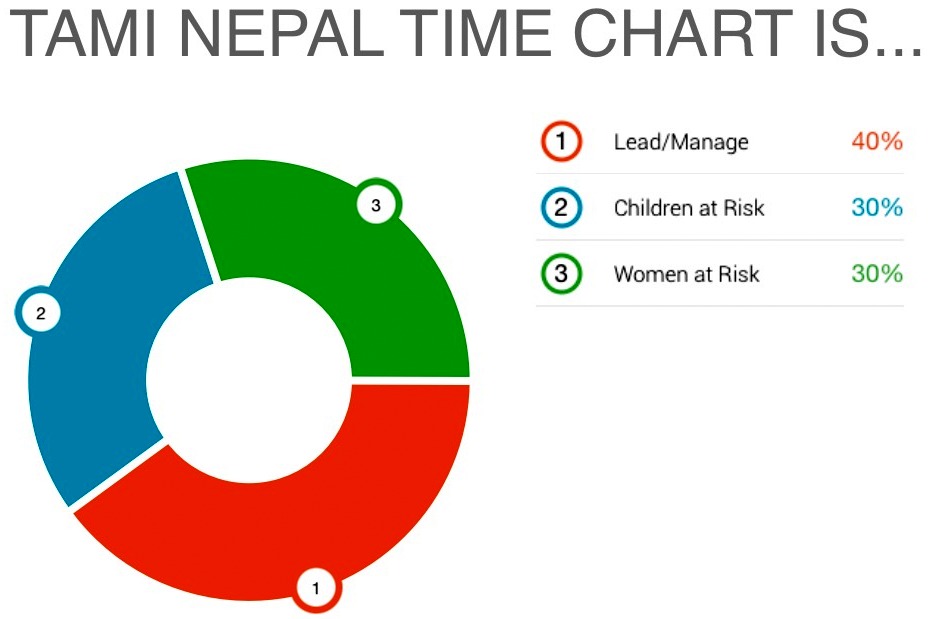



 Who inspires you?
 encouragement, prayer—someone you can be really open with?

 Tattoo It On Your Heart